
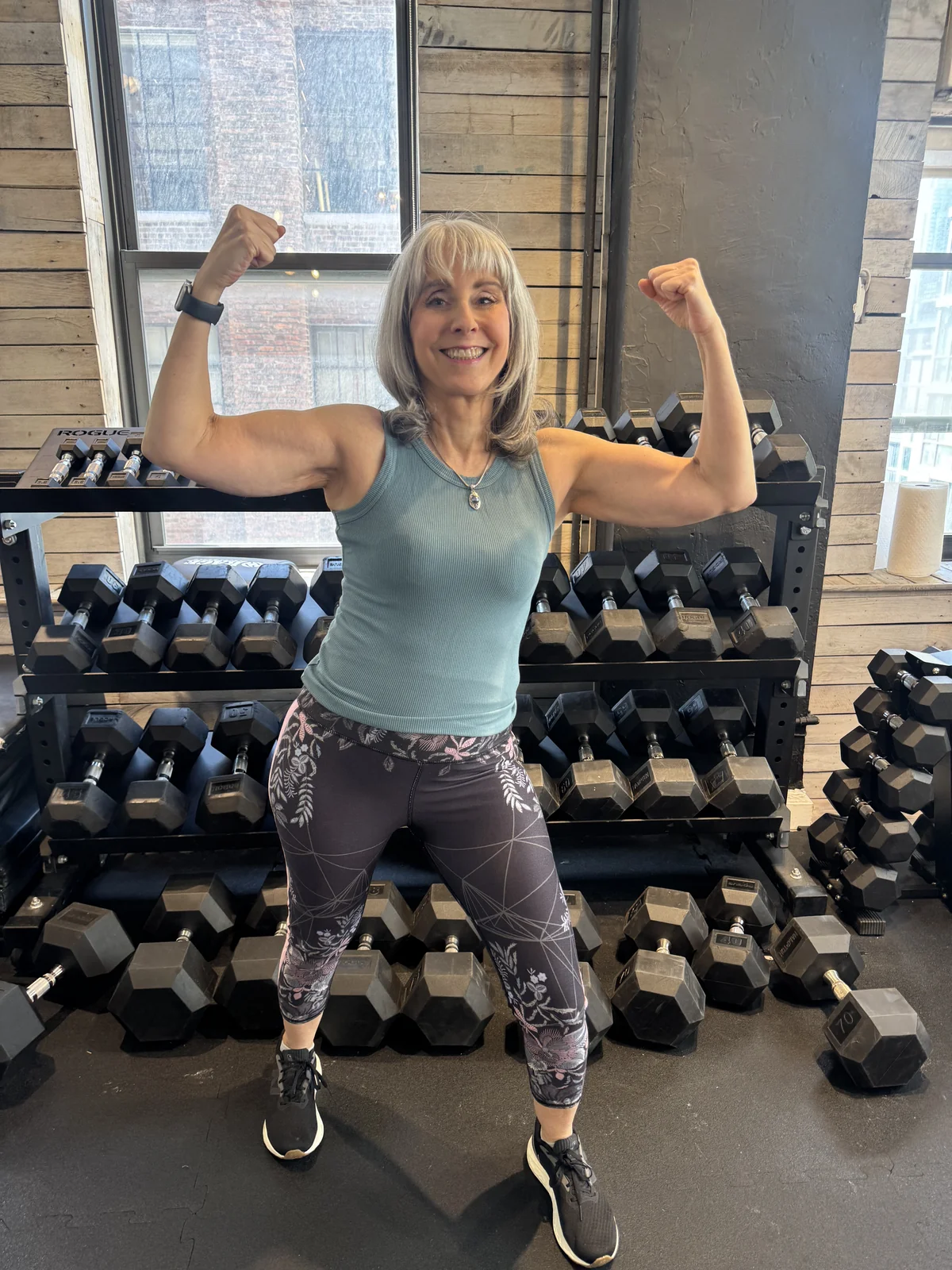
If there's one form of exercise worth prioritizing as you get older, it's strength training. Not because of how it looks, but because of what it lets you keep doing — getting out of a chair, carrying groceries, climbing stairs, staying steady on your feet. This guide covers the whole picture: why it matters, what to actually do, and how to start safely, with links to more detailed reads along the way.
Why strength training matters for seniors
We all lose muscle gradually as we age — it's a normal part of getting older. Strength training, also called resistance training, is how you build that muscle back and hold onto it. And for older adults, the benefit isn't abstract: it shows up directly in the things that keep you independent. Standing up without using your hands. Carrying a bag up the subway stairs. Getting down to the floor and back up again. Catching yourself if you stumble.
That's the lens to keep throughout this guide. The goal of strength training for seniors isn't a number on a barbell or a particular look — it's keeping the everyday movements of life easy, and staying capable and confident doing them.
Is it ever too late to start?
No. This is the most important myth to clear up. Adults in their 60s, 70s, and 80s build real strength when they train, and beginners often see the fastest early progress precisely because the movements are new. You don't need to have been an athlete, you don't need to already be fit, and you don't need to be able to do much on day one. You just need to start where you are and build from there.
The five movements every program is built on
You don't need a machine for every muscle. Almost everything an older adult needs comes from five movement patterns that mirror real life:
- Squat — standing up and sitting down with control (a chair is the perfect starting tool). The foundation for stairs and getting out of a seat.
- Hinge — pushing your hips back to pick things up. This is the one most worth coaching carefully, because doing it well protects your back every time you lift something.
- Push — pressing weight away from you or overhead, like a wall push-up or a dumbbell press.
- Pull — rowing or pulling, which balances posture and builds the strength you use on handrails and doors.
- Carry — simply walking while holding weight, the most practical strength there is.
Learn these five with good form and you've covered the vast majority of what daily life asks of your body.
How to start, safely
The golden rule for beginners: start lighter than you think you should, and earn the right to add weight. The most common reason people quit is going too hard in the first week, getting sore or spooked, and never coming back. A good gauge is that at the end of each set you should feel like you had two or three more reps in you. If a movement feels shaky or makes you hold your breath, it's too heavy — drop it down.
Breathe out on the effort, move slowly and with control (especially on the way down), and favor clean form over heavier weight every time. Consistency is what builds strength — two short sessions you actually keep beats an ambitious plan you abandon.
How heavy and how often
For most beginners, a simple template works well: pick a weight you can control, do 8 to 12 reps, 2 sets of each movement, twice a week to start, with a rest day in between. Once that feels routine, you can add a third day. We break down a realistic, sustainable schedule in our guide to how often adults over 50 should strength train.
Adapting strength training to you
"Strength training for seniors" isn't one-size-fits-all — the right starting point depends on you. A few more detailed guides for specific situations:
- Starting as a woman over 50? Our strength training for women over 50 guide tackles where to begin and the "I don't want to get bulky" worry head-on.
- Starting as a man over 50? Our strength training for men over 50 guide covers the ego-lifting trap and why recovery matters more now.
- Dealing with stiff or achy joints? See our trainer's take on exercises for seniors with arthritis for joint-friendly ways to keep moving.
- Worried about balance or falls? Strength and balance go together — our fall prevention guide for adults over 60 shows how.
Common mistakes to avoid
- Going too heavy too soon. The number-one reason beginners stop. Patience wins.
- Skipping the legs. It's tempting to favor what you can see, but your legs and hips are what keep you independent — they get priority.
- Ignoring recovery. Muscle is built during rest, not just during the session. Rest days are part of the program.
- Quitting after one sore week. Some soreness when you start is normal and settles within a couple of weeks. Ease the load and keep the appointment.
On your own, or with a trainer?
You can absolutely begin on your own with the five movements above. Where a trainer earns their keep — especially in the first weeks — is coaching the squat and hinge so they're clean before you load them, adjusting things for your body, and taking the guesswork and the gym anxiety out of starting. If you've had a fall, a surgery, or a long time away from exercise, having someone watch the start is simply sensible. Our honest look at whether a personal trainer is worth it for seniors covers when it's worth the investment.
At BUF Over 50 in Midtown Manhattan, strength training for seniors is exactly what we do — light, patient, and built around the movements that keep daily life easy, for adults in their 50s through their 80s. Our team includes Certified Senior Fitness Specialists alongside experienced Certified Personal Trainers; read more on the trainers page, see straightforward pricing on the rates page, and note we also offer mobility sessions and virtual training. No contracts, all sessions under $100.
Want to talk through where you'd start? Get in touch for a free consultation — no pressure, no commitment.
Ready to get started?
Senior personal training in Midtown Manhattan, all sessions under $100, no contracts.