
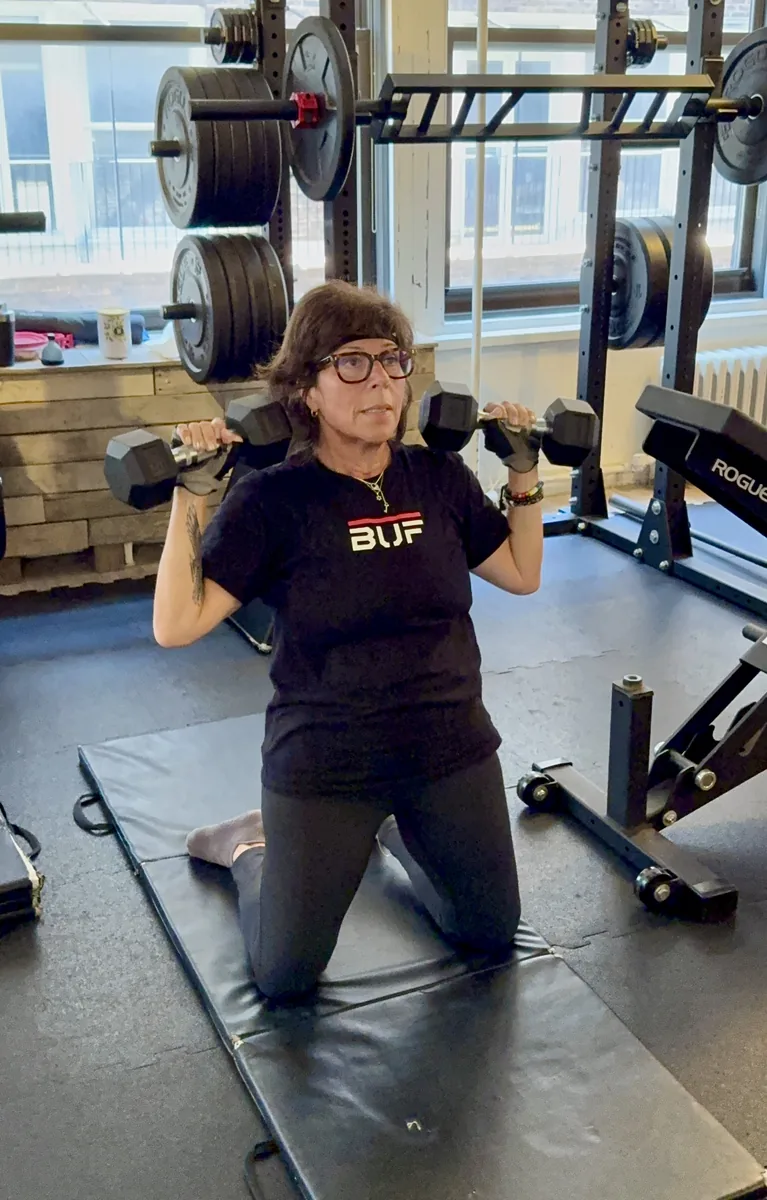
More women start strength training in their 50s than at any other age — and almost all of them arrive with the same two questions: where do I even begin, and will lifting weights make me look bulky? Let's answer both, plainly.
Why strength training is worth it for women over 50
We all lose muscle gradually as we get older — that's simply part of aging. Strength training is how you build it back. And for women over 50, the payoff shows up less on a scale and more in everyday life: standing up from a low chair without pushing off, carrying groceries up the subway stairs, lifting a suitcase into the overhead bin, getting down on the floor with a grandchild and back up again without a struggle.
That's the frame worth keeping. You're not training to look like anyone or hit a number — you're training so the ordinary physical demands of your week stay easy, and so you feel strong and steady doing them. Everything below is built around that goal.
"But I don't want to get bulky"
This is the single biggest thing that keeps women from picking up a weight, so let's put it to rest. Building large, bulky muscle is genuinely difficult — it takes years of high-volume training, very heavy loads, and eating specifically to grow. It does not happen by accident, and it does not happen from a sensible twice-a-week program.
What strength training actually does for most women over 50 is build strength and definition while you keep the lean, capable shape you're after. You'll feel powerful and look toned, not big. If anything, the women who train with us are surprised how much stronger they get while their clothes fit better, not tighter. So set that worry down — it's not what's going to happen.
Where to start
You don't need a machine for every body part. Almost everything a beginner needs comes from a handful of movement patterns that mirror real life:
- Sit-to-stand (a chair squat) — standing up and sitting down with control. It's the most transferable movement there is.
- A hip hinge — pushing your hips back to pick things up safely, which protects your back every time you lift the laundry basket.
- A press — pushing weight away from you or overhead, like the dumbbell press in the photo above.
- A row — pulling, which balances out all the forward-rounded posture from phones and desks.
- A carry — simply walking while holding weight, the most honest "real life" exercise of all.
Learn those five, done with good form, and you've covered most of what daily life asks of your body.
How heavy, and how often
Start lighter than you think you should. The most common reason beginners quit is going too hard in week one, getting sore, and never coming back. A good gauge: at the end of a set you should feel like you had two or three more reps in you. Aim for 8 to 12 reps, 2 sets of each movement, twice a week to begin, with a day of rest in between.
Consistency beats intensity every single time at the start. Two short sessions you actually keep will do far more than an ambitious plan you abandon by the end of the month. We go deeper on building a sustainable schedule in our guide to how often adults over 50 should strength train.
What tends to hold women back — and how to get past it
- Gym intimidation. Walking into a room full of equipment you don't recognize is uncomfortable for anyone. A simple plan, a quieter time of day, or a few sessions with a trainer in a private studio removes that wall entirely.
- "It's too late for me." It isn't. Women starting in their 60s, 70s, and 80s get meaningfully stronger — beginners often see the fastest early progress precisely because everything is new to the body.
- Comparing yourself to others. The only comparison that matters is to yourself a few weeks ago. The woman next to you started somewhere too.
When working with a trainer helps
You can absolutely begin on your own with the patterns above. Where a trainer earns their keep, especially early, is in coaching the squat and hinge so they're clean before you add weight, and in taking the guesswork and the gym anxiety out of the first few weeks. If you've had a fall, a surgery, or a long time away from exercise, having someone watch the start is reassuring and sensible. Our guide on whether a personal trainer is worth it walks through when it's worth the investment.
At BUF Over 50 in Midtown Manhattan, we specialize in strength training for women over 50 — light, patient, and built around the movements that keep daily life easy. Our team includes Certified Senior Fitness Specialists alongside experienced Certified Personal Trainers; read more on the trainers page, and see straightforward pricing on the rates page. We also offer mobility sessions and virtual training. No contracts, all sessions under $100.
Curious what a first session would feel like? Get in touch for a free consultation — no pressure, no commitment.
Ready to get started?
Senior personal training in Midtown Manhattan, all sessions under $100, no contracts.