
Catch your reflection in a shop window lately and notice you're a little more rounded than you remember? You're in good company — and it's far more about habits than age. Decades of desks, phones, and couches teach the body a shape. The good news: the body learns new shapes the same way it learned that one. Here's how.
Why posture changes after 50
Your body adapts to the positions you spend time in. Hours sitting shorten the front of the hips; hours looking at screens draw the head forward and round the shoulders; and the upper-back muscles that hold you tall gradually weaken from underuse. Stack up enough years of that, and "rounded" becomes the default the body returns to. None of this is a character flaw and none of it is set in stone — it's an adaptation, and adaptations can be retrained.
The real fix: strength and mobility, not willpower
"Stand up straight" fails as a strategy because you can't consciously hold a position all day — nobody can. What actually works is twofold: strengthening the muscles that hold you tall (upper back, rear shoulders, core) so upright becomes easy rather than effortful, and opening the areas that decades of sitting have tightened (chest, front of the shoulders, hip flexors) so upright is available in the first place. Do both, and good posture stops being something you remember and starts being where your body naturally rests.
A daily posture routine
Five movements, about eight minutes, no equipment beyond a wall and a light resistance band. Move gently and within comfortable ranges — nothing here should be forced.
- Chin glides. Sitting or standing tall, gently glide your head straight back — as if making a double chin — hold a moment, release. 8 to 10 reps. This counters the head-drifts-forward habit from screens.
- Wall angels. Stand with your back against a wall, arms in a goalpost position, and slowly slide them up and down while keeping arms and back in contact with the wall as best you can. 6 to 8 slow reps. Humbling at first, and that's the point.
- Band rows. Anchor a band at chest height, pull your elbows back toward your hips, and squeeze your shoulder blades together. 10 to 12 reps. This is the single most valuable posture-strengthening move there is.
- Doorway chest opener. Forearm on a doorframe, elbow at shoulder height, and gently turn your body away until you feel an easy stretch across the chest. 20 to 30 seconds per side — a comfortable stretch, never a strain.
- Standing hip opener. In a gentle staggered stance, tuck your tailbone slightly and shift forward until you feel an easy stretch at the front of the rear hip. 20 to 30 seconds per side. This unwinds the sitting hours.
The habits that do the rest
Exercises retrain the body; habits stop re-teaching the old shape. Three that matter most: raise your screens (phone to eye level when you can, monitor propped up), break up sitting every 30 to 45 minutes with even a brief stand and reach, and walk regularly — walking with your eyes on the horizon rather than the pavement is quiet posture practice built into your day.
What to expect, honestly
Not an overnight transformation — a gradual one. Most people notice the routine getting easier within a couple of weeks (wall angels reaching a little higher, the chest opener feeling less tight), and others start noticing them standing taller over a month or two. And skip the rigid, shoulders-pinned-back military posture entirely: the goal is a tall, relaxed, easy stance, not a held pose.
Posture connects to everything else
The row is a core movement in our complete strength training guide for exactly this reason — posture strength and general strength are the same project. The doorway and hip openers pair naturally with the daily mobility routine, and standing tall makes the work in our balance progression noticeably easier, since a stacked, upright body balances better than a rounded one.
When guided work helps
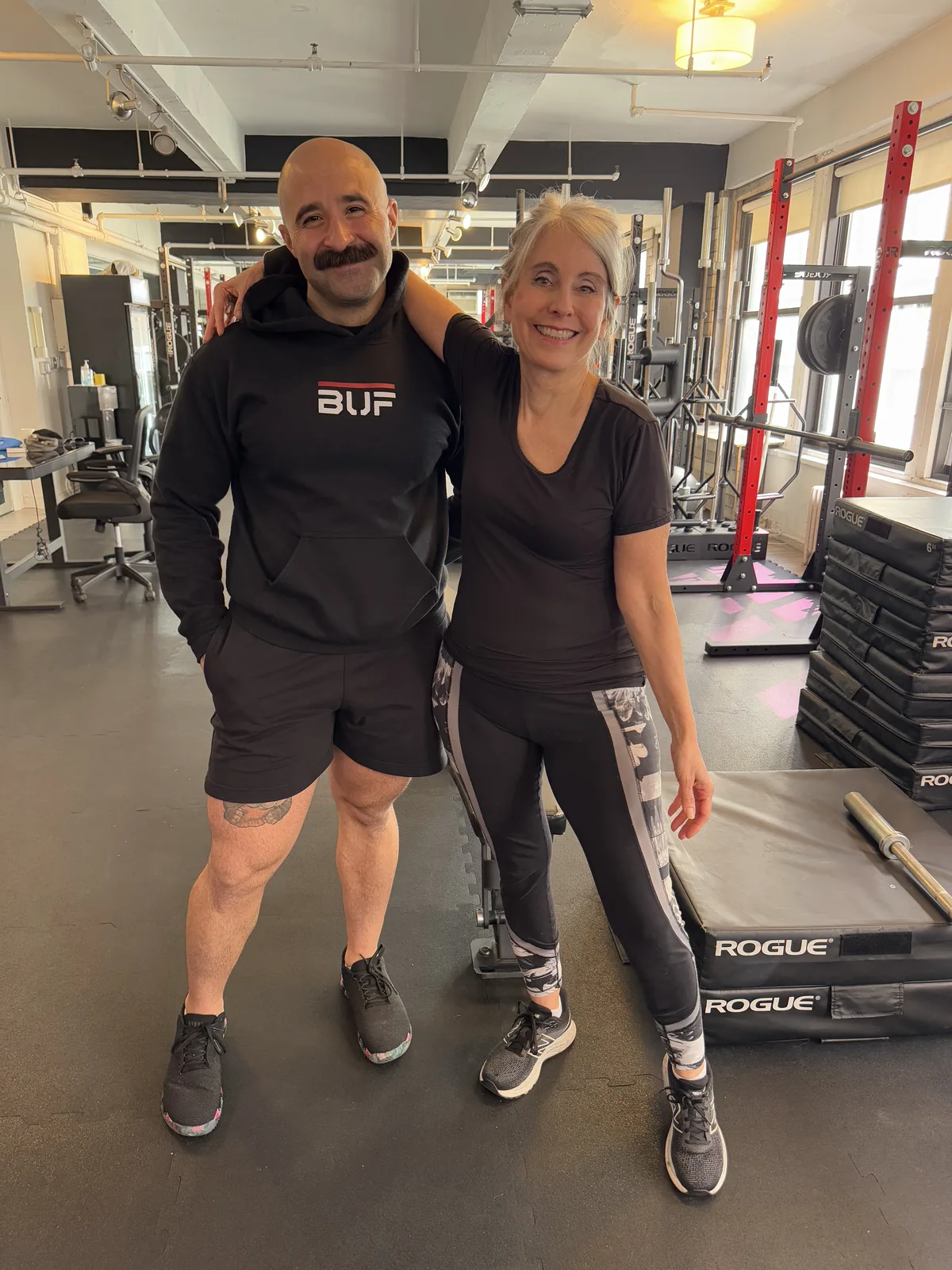
If you're not sure your wall angels or rows look the way they should — or you want the posture work built into a full program rather than bolted on — that's where coaching pays off. At BUF Over 50 in Midtown Manhattan, posture work is woven into how we train adults 50 and older: the pulling strength, the openers, and the habits, tailored to your body in private one-on-one sessions. Our team includes Certified Senior Fitness Specialists alongside experienced Certified Personal Trainers (meet them here), pricing is plain on the rates page, and there are no contracts. Curious how it starts? Here's exactly what a first session looks like.
Want help standing taller? Book a free consultation — no pressure, no commitment.
Ready to get started?
Senior personal training in Midtown Manhattan, all sessions under $100, no contracts.