
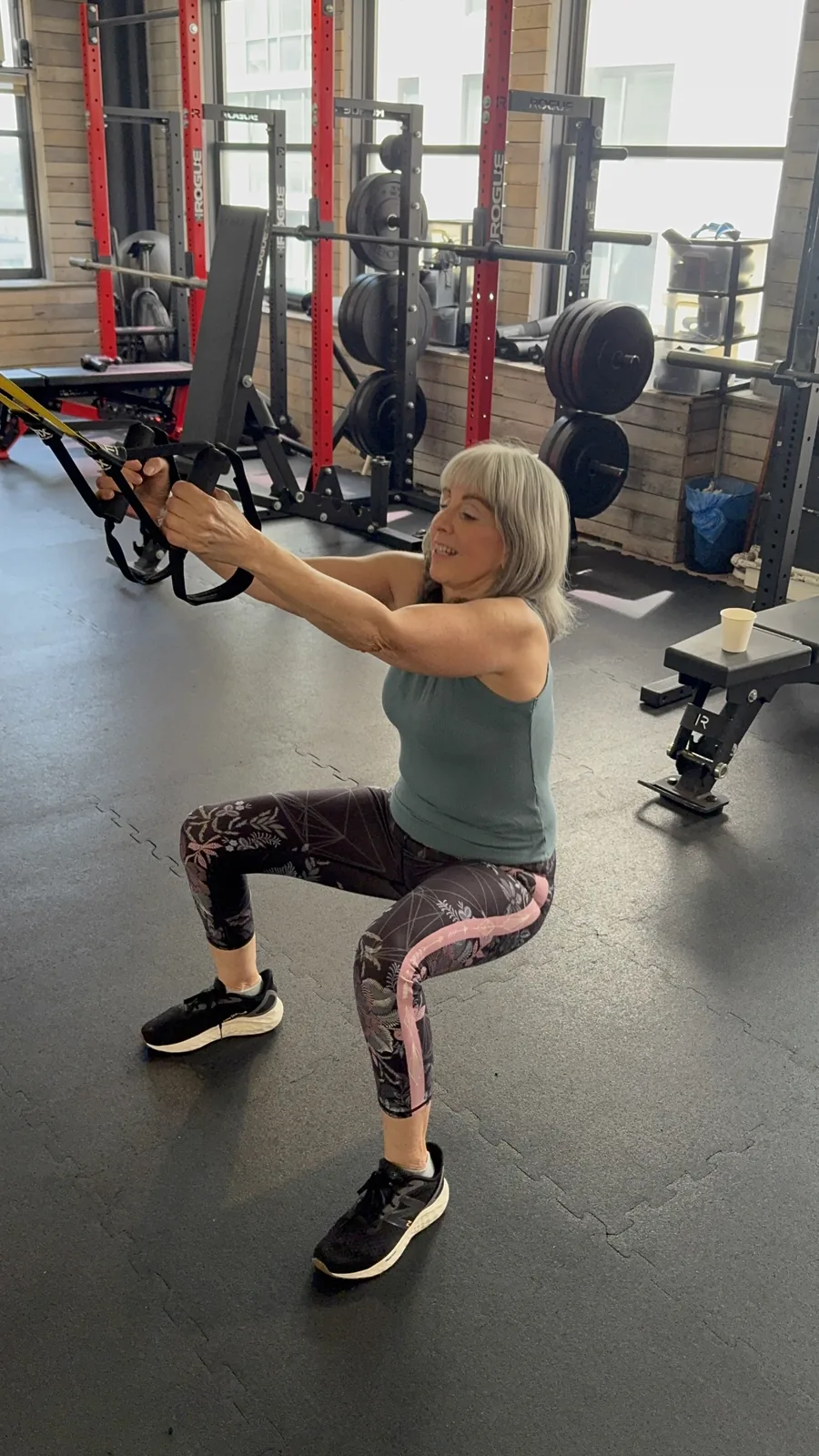
Strength gets most of the attention, but mobility is what makes strength usable in daily life. It's the difference between being strong and being strong and able to reach the top shelf, glance over your shoulder while driving, and get down to the floor and back up without a fuss. Here's how to work on it.
What "mobility" actually means
People use "mobility," "flexibility," and "stretching" interchangeably, but they're not quite the same. Flexibility is how far a muscle can lengthen. Mobility is how well you can actively move a joint through its full range — flexibility plus the control to use it. For everyday life, mobility is the one that matters most, because real movement is active: you're not holding a stretch, you're reaching, twisting, and bending with control.
Why mobility matters for seniors
We tend to move through smaller and smaller ranges as we age — often simply because we sit more and reach less, and the body keeps what you use. The good news is that range responds to gentle, consistent work. And the payoff is entirely practical: reaching a high cabinet, looking behind you when you back up the car, bending to tie your shoes, pulling a shirt over your head, getting in and out of a car with ease. Mobility work keeps those ordinary motions comfortable.
Mobility vs. stretching: which should you do?
Both have a place. Dynamic mobility — gently moving a joint through its range, like slow arm circles or trunk rotations — is a great way to start the day or warm up before activity. Static stretching — easing into a lengthened position and holding it comfortably — is better suited to after activity or a wind-down. For most older adults, a little gentle daily mobility does more good than an occasional intense stretch session. Little and often wins.
A simple daily mobility routine
You don't need a floor routine or any equipment to start. Here's a gentle head-to-toe sequence you can do standing, holding a counter or chair for support as needed. Move slowly, only into a range that feels comfortable, and never force or bounce.
- Neck turns. Slowly turn your head to look over one shoulder, then the other. Great for the "checking your blind spot" motion.
- Shoulder rolls and reaches. Roll the shoulders back a few times, then gently reach one arm overhead at a time.
- Trunk rotations. Standing tall, turn your upper body gently left and right, letting your arms swing loosely.
- Hip circles. Hands on hips, make slow, easy circles to loosen the hips.
- Ankle rocks. Holding support, rock gently onto your toes and back to your heels, and roll the ankles. Ankles are quietly essential for balance and walking.
A few slow repetitions of each — five minutes total — done most days is plenty to start noticing a difference in how freely you move.
How to do it safely
Stay within a range that feels comfortable — mobility work should feel like gentle movement, never a sharp pull. Breathe normally rather than holding your breath, move slowly and with control rather than bouncing, and use a counter or sturdy chair for support whenever balance is a factor. As with strength, consistency beats intensity: a short routine you actually do daily will do far more than an ambitious one you do twice.
Mobility and strength go together
Mobility and strength aren't separate projects — they reinforce each other. Better range of motion lets you strength train through fuller, safer positions, and strength gives you the control to actually use your range. If you're building a routine, pair this mobility work with the fundamentals in our complete guide to strength training for seniors. And if stiff or achy joints are part of the picture, our guide to exercises for seniors with arthritis offers joint-friendly ways to keep moving. Since good mobility and balance go hand in hand, it also supports the work in our fall prevention guide.
When guided mobility work helps
You can start the routine above on your own today. Where a trainer adds value is in finding the specific areas that have gotten tight for you and giving you targeted work for them, and in keeping the movements safe if balance or a past injury is a concern. That's exactly what our dedicated mobility sessions are built for.
At BUF Over 50 in Midtown Manhattan, we help adults 50 and older move more freely and comfortably, with mobility work woven into training or offered as standalone sessions. Our team includes Certified Senior Fitness Specialists alongside experienced Certified Personal Trainers; read more on the trainers page, and see straightforward pricing on the rates page. No contracts, all sessions under $100.
Want help building a routine around how your body moves? Get in touch for a free consultation — no pressure, no commitment.
Ready to get started?
Senior personal training in Midtown Manhattan, all sessions under $100, no contracts.