
Most people treat balance as something that just happens to decline with age. Trainers see it differently: balance is a trainable skill, built from leg strength, ankle mobility, and — most of all — regular practice at the right level of challenge. The key phrase is the right level. Here's how to find yours and progress from there.
How balance actually improves
Balance is your body constantly making tiny corrections — ankles adjusting, hips shifting, eyes and inner ear feeding information. Like any skill, it sharpens when you practice it and dulls when you don't. The catch is that daily life quietly removes the practice: we hold rails, avoid uneven ground, sit more. Balance training simply puts structured, safe practice back in — a few minutes of standing work at a level that challenges you slightly, most days. Little and often beats occasional and heroic.
The safety rules first
- Always have support in reach. Practice next to a kitchen counter, sturdy chair back, or in a corner — close enough to grab without lunging.
- Challenge, don't gamble. The right level feels slightly wobbly but controlled. If you're genuinely afraid of tipping, drop back a level.
- Have someone nearby when trying a new level for the first time, especially the unsupported ones.
- Progress one variable at a time — narrow the stance or lighten the hand support, not both at once.
The progression: four levels
Level 1 — Supported standing
Both hands on the counter. Stand with feet together and hold for 20 to 30 seconds. Then try a semi-tandem stance — one foot half a step ahead, heel beside the other foot's toes. When that's steady, go to tandem stance: heel directly in front of toes, like standing on a narrow beam. Still steady? Move to one hand, then fingertips.
Level 2 — Light or no support
Same stances — feet together, semi-tandem, tandem — but with hands hovering just above the counter rather than gripping it. This is where the ankles start doing real work. Stay here as long as you need; hovering hands with a tandem stance is genuinely challenging.
Level 3 — Single-leg practice
With fingertip support, shift your weight fully onto one leg and lift the other foot just off the floor. Start with a few seconds per side and build. This matters because walking is really a series of brief single-leg balances — every step you take spends a moment on one foot.
Level 4 — Balance in motion
Static standing is the foundation, but life happens while moving. Along the counter: heel-to-toe walking (each step lands heel touching toes), slow weight shifts side to side, and gentle step-overs — stepping sideways over an imaginary line. These train the balance you actually use crossing a street or navigating a crowded sidewalk.
Two things that quietly build your balance
Standing practice is half the picture. The other half is what your balance stands on: leg strength — the sit-to-stand and step-up work in our complete strength training guide gives your corrections real power — and ankle mobility, which determines how well your feet can adjust beneath you; the ankle work in our mobility routine pairs directly with everything above. If steadiness is a genuine worry for you day to day, our fall prevention guide is the companion read on building confidence on your feet.
How often, and what progress looks like
A few minutes daily beats one long weekly session — balance responds to frequency. Progress shows up as quiet moments: reaching a high shelf without grabbing anything first, stepping off a curb without thinking about it, putting on pants standing up. Those are wins worth noticing.
When guided balance work makes sense
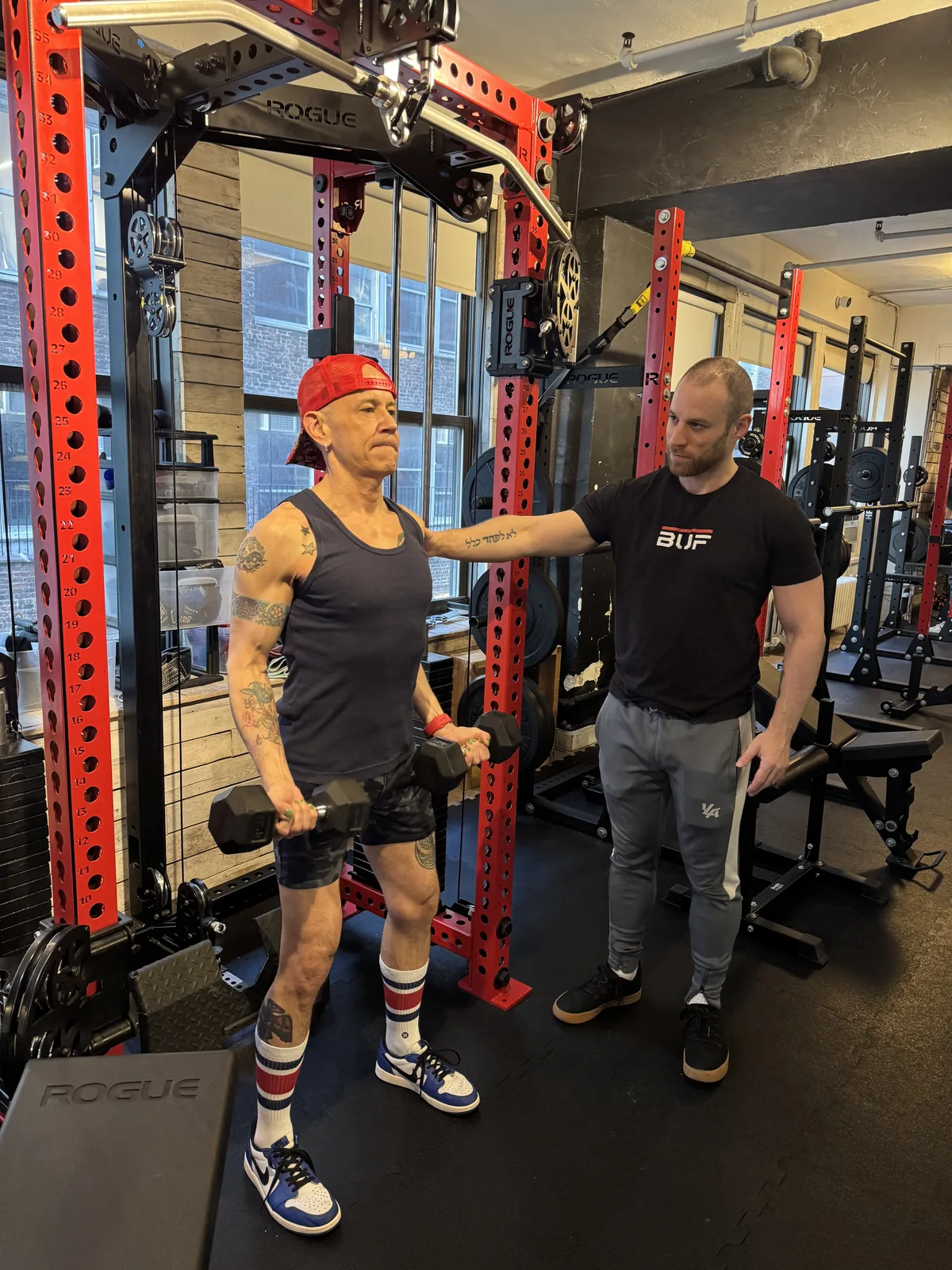
If you've had a fall, feel unsteady even at Level 1, or simply want someone watching while you push to the next level, guided sessions take the anxiety out of it. A trainer finds your true starting level, spots you through progressions, and pairs the balance work with the strength and mobility pieces. That's exactly what we do at BUF Over 50 in Midtown Manhattan — one-on-one, in a private appointment-only studio, with Certified Senior Fitness Specialists on the team alongside Certified Personal Trainers experienced with adults 50+. Meet them on the trainers page, see plain pricing on the rates page — no contracts, all sessions under $100. And if you're curious how a first session works, here's exactly what to expect.
Want a spotter for your next level? Book a free consultation — no pressure, no commitment.
Ready to get started?
Senior personal training in Midtown Manhattan, all sessions under $100, no contracts.