
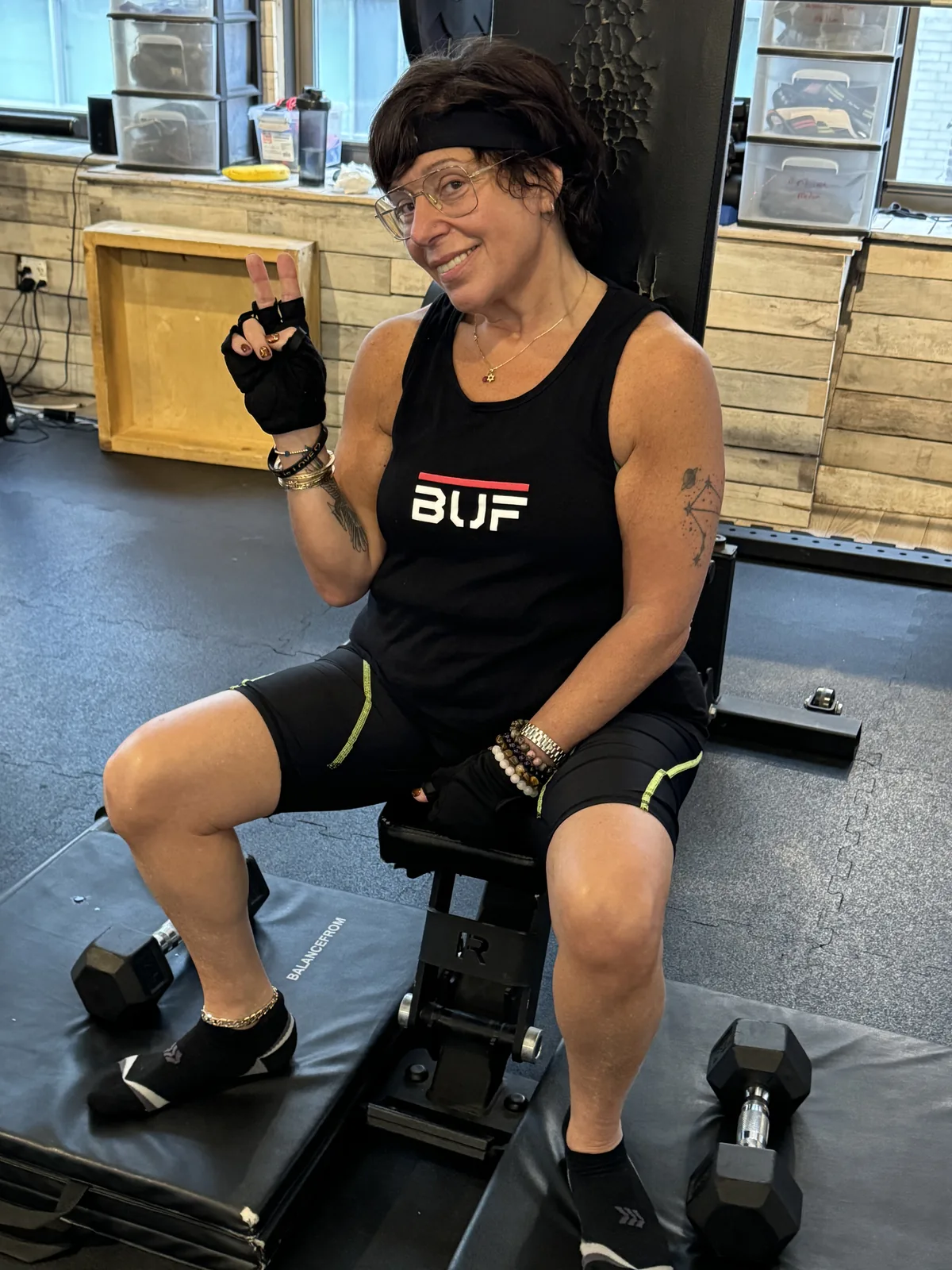
Most people over 50 who are nervous about a first training session are picturing the wrong thing: a drill-sergeant workout they're not ready for, in front of people half their age. The reality — at any good studio — is closer to a guided conversation with some gentle movement mixed in. Here's the play-by-play, so nothing on the day is a surprise.
Before the session: the consultation
Most senior-focused studios (ours included) start with a free consultation — a conversation, not a workout. You'll talk about what you want out of training ("I want to stop worrying on stairs" is a perfectly good goal), anything relevant in your history — past injuries, surgeries, a fall, decades away from exercise — and what your week realistically allows. Be candid here: the more the trainer knows, the better your first session fits you. There is nothing to prepare and nothing to prove.
What to wear and bring
Comfortable clothes you can move in and supportive sneakers — that's genuinely it. Bring water if you like (most studios have it), and any questions you've been sitting on. You do not need gym clothes that look a certain way, gloves, or equipment. If you take any mobility aids, bring them as you normally would; a good trainer works with how you actually get around.
What actually happens, step by step
- A short conversation first. Even after a consultation, a good trainer starts by checking in: how you're feeling today, anything sore, anything on your mind.
- A gentle movement assessment. Not a fitness test. The trainer watches how you move through everyday patterns — standing up from a chair, reaching overhead, a short walk, maybe a light balance check with support nearby. You'll never be pushed past what feels comfortable; the whole point is finding your genuine starting line.
- Some light, guided exercise. A handful of simple movements at an easy level, with the trainer coaching your form. This is calibration — seeing how your body responds — not a workout designed to wear you out.
- A plan conversation. The session ends with what the trainer saw, what they'd suggest working on first, and what a sensible schedule looks like. You should leave with a clear picture of what weeks one through four would involve.
What a good trainer is actually looking for
Not how fit you are. They're mapping your starting point: which movements come easily, which are tight or shaky, how your balance is with and without support, and what your body is ready for on day one. Whatever they find is simply information — every single client started somewhere, and trainers who specialize in adults 50+ have seen every possible starting point. There is no version of "too out of shape" that surprises them.
Questions worth asking them
- What certifications do you hold — and do you have a senior fitness specialty?
- How much of your client base is over 50?
- What would my first month look like?
- What does it cost per session, plainly — and is there any contract?
Any good studio answers all four without hesitation. For the full vetting checklist, see our guide to choosing a senior fitness trainer in NYC, and for realistic pricing context, our NYC senior personal training cost guide.
Red flags in a first session
A few things should give you pause: being pushed hard on day one before anyone's watched how you move; a trainer who talks more than they ask; and — the big one — high-pressure sales for a long package or contract before you've even finished the session. A first session should feel like the beginning of a plan built around you, not the close of a sale. If it feels like the latter, our honest look at when a trainer is worth it can help you reset the decision on your terms.
How you should feel afterward
Pleasantly worked, not wrecked. A little muscle awareness the next day is normal; being too sore to move is a sign the session was run wrong, not that you're behind. Mostly you should feel informed — clear on your starting point, clear on the plan, and noticeably less nervous than when you walked in. That last part is the real product of a first session.
What it looks like at BUF Over 50
At BUF Over 50 in Midtown Manhattan, this is exactly how first sessions run: a free consultation first, then a private one-on-one session in a studio that's appointment-only — no crowd, no audience, nobody but you and your coach. Our team includes Certified Senior Fitness Specialists alongside experienced Certified Personal Trainers (meet them here), pricing is plain and per-session on the rates page, and there are no contracts — ever. If the gym environment itself is part of your hesitation, our guide to what makes a gym genuinely senior-friendly covers what to look for anywhere you go.
Ready to see what your starting point looks like? Book a free consultation — a conversation first, no pressure, no commitment.
Ready to get started?
Senior personal training in Midtown Manhattan, all sessions under $100, no contracts.