
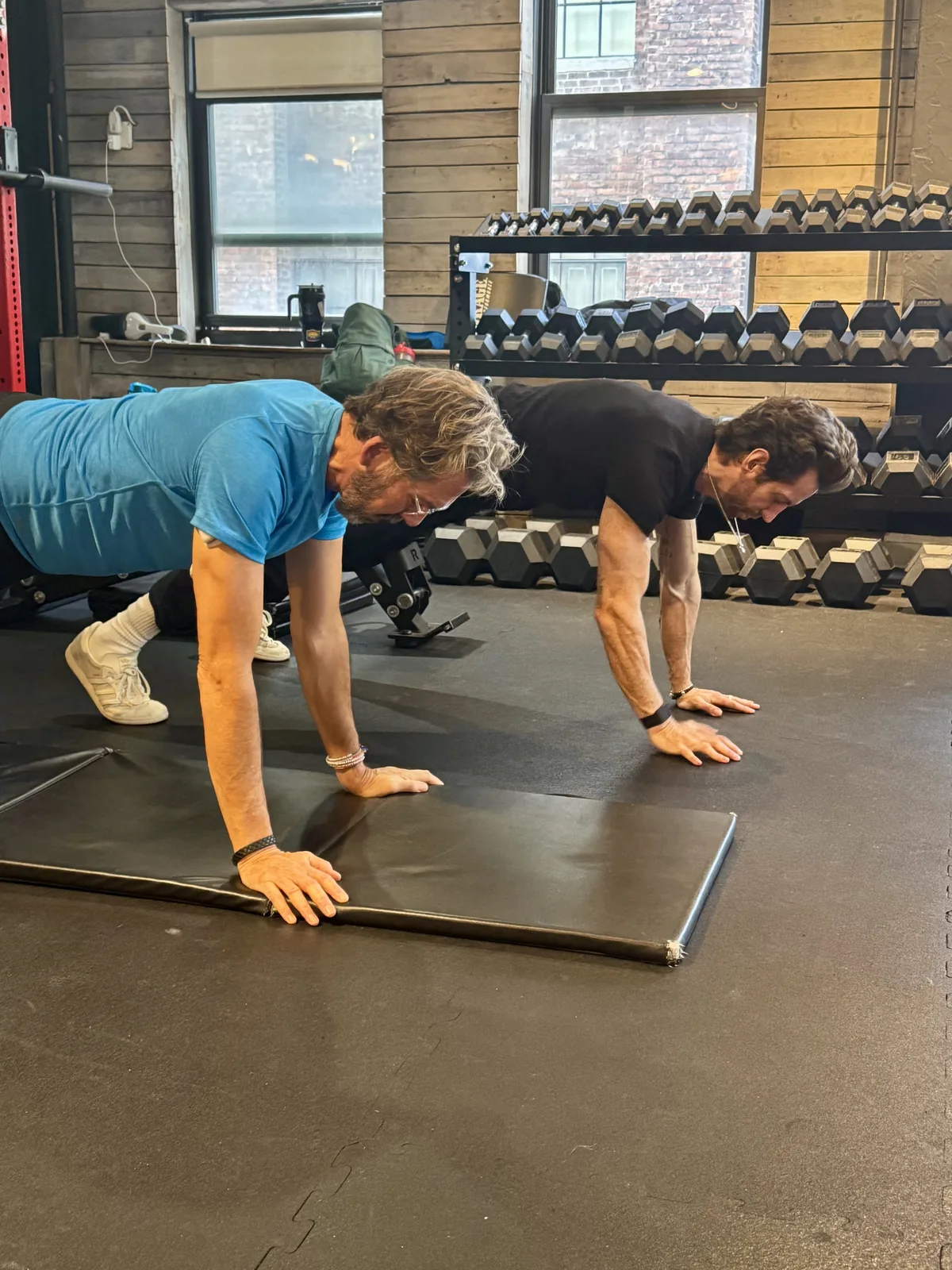
There are thousands of personal trainers in New York City, but only a tiny fraction are genuinely qualified to work with senior citizens and adults 50+. The fitness industry has very low barriers to entry — anyone can call themselves a "personal trainer" after a weekend certification. The signals that matter for senior fitness are mostly invisible to people shopping for a trainer for the first time. This guide is what to actually look for.
The certifications that matter
"Certified Personal Trainer" can mean wildly different things. The major accredited organizations are NASM, ACE, NCSF, and NSCA — these are the floor. A trainer without one of these almost certainly hasn't been formally trained.
For senior fitness specifically, look for one of these specialty credentials:
- NASM Certified Senior Fitness Specialist (SFS) — Coursework specifically on training adults 55+, including chronic conditions and balance/mobility programming.
- ACE Certified Senior Fitness Specialist — Similar curriculum from the American Council on Exercise.
- FAI Functional Aging Specialist — More advanced specialization in aging populations.
- NASM CES (Corrective Exercise Specialist) — Especially valuable if you have a history of injury, joint replacement, or chronic pain.
A trainer with a base CPT plus a senior fitness specialty has demonstrably studied how aging affects the body — hormonal changes, joint integrity, bone density, recovery time, balance, neurological changes. A trainer without any senior-specific credential is probably treating you like a younger client with smaller weights, which is the wrong approach.
Experience with senior clients
Credentials are necessary but not sufficient. Some trainers pass the senior fitness exam without ever actually training a 70-year-old. Ask directly:
- "What percentage of your clients are over 50?" You want 30%+ minimum. A trainer whose roster is mostly 25-year-olds will default to programming that doesn't fit you.
- "Have you worked with clients managing [your specific condition]?" Arthritis, joint replacements, osteoporosis, diabetes, heart conditions — whatever you're dealing with, ask if they've trained someone through it before.
- "What does a typical session look like?" Listen for warm-up structure, mobility integration, programmed progression, and cool-down. If they describe "whatever you feel like doing that day," walk away.
Communication style
This matters more than people realize. The right trainer for senior citizens needs to:
- Listen to your goals and history. The first session should feel like a conversation, not a sales pitch.
- Explain the why. A good trainer explains why a movement is in your program, not just "do this." Senior clients especially benefit from understanding the reasoning.
- Adjust without ego. If something hurts, the right trainer modifies immediately. The wrong one tells you to "push through it."
- Respect your judgment. You've lived in your body for 60-70 years. You know more about your knee than they do.
Studio environment
The space matters. Visit before committing. A good senior fitness studio has:
- Equipment that fits a range of sizes and strengths (light dumbbells, not just 25-lb minimums)
- Mobility tools — bands, foam rollers, mats, TRX or suspension trainers
- Space to walk and move in different directions (not just rows of machines)
- Clean, well-lit, with enough room that you're not crammed next to other clients
- Accessible entry — elevator if it's not on a ground floor
Red flags
- Aggressive sales pressure for large packages. A good studio sells you on results; a bad one sells you on commitment. Walk away from anyone pushing 30-session prepaid packages on day one.
- Mandatory contracts or membership fees. Pay-per-session or short-term packages are far more honest. Membership fees are usually a profitability trick, not a sign of quality.
- One-size-fits-all programs. If you walk in and they hand you the same workout they gave the last person, leave. Your program should reflect your specific body and goals.
- "You shouldn't lift heavy at your age." This is the single most common piece of bad advice senior citizens hear. Strength training is one of the most beneficial things adults over 50 can do; a trainer who's afraid of resistance training for older clients is poorly trained.
- No initial consultation or screening. A trainer who skips asking about your medical history, medications, joint history, and goals is going to skip those considerations in your program too.
Questions to ask before signing up
- What specific certifications do you hold related to senior fitness?
- How many of your current clients are over 50?
- What's your approach to clients with [my condition]?
- What's your pricing model — per-session or package?
- What happens if I need to cancel a session?
- Can I try one session before committing?
Any qualified trainer will answer all of these without hesitation. Hesitation on any of them — particularly the pricing/cancellation questions — is a warning sign.
What it should cost in NYC
A reasonable range in NYC for a properly credentialed senior fitness trainer is $80-$150 per hour. Below $80, you're likely getting an undertrained or inexperienced trainer. Above $150 and you're usually paying for a brand-name studio location, not better expertise.
At BUF Over 50, all our sessions are under $100 — $85–$98 per hour for 1-on-1 and $60–$70 per person for 1-on-2 partner training (frequency-dependent). We don't require contracts or membership fees. Our team includes Certified Senior Fitness Specialists alongside experienced Certified Personal Trainers. Meet the team here, and get in touch when you're ready for a free consultation — no commitment, just a conversation.